Sudden GH Depletion in Mystery Snail Tanks: Crushed Coral Fix
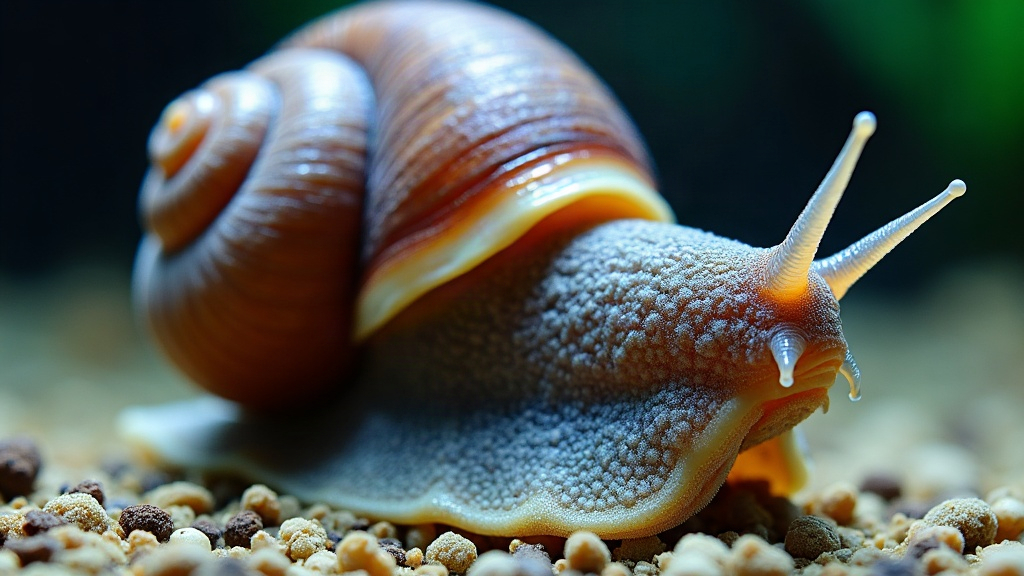
If your once-thriving mystery snail colony suddenly looks off, pitted shells, eggs that never hatch, snails sitting motionless for days, chances are you’re dealing with a General Hardness (GH) crash. Here’s why it happens even in tanks that have been rock-solid for months, how to actually confirm it’s GH and not something else, and why crushed coral tends to be the fix experienced breeders reach for first.
Why GH Suddenly Drops in an Established Tank
Mystery snails (Pomacea bridgesii) burn through dissolved calcium and magnesium constantly. Their shells are basically a running construction project, and calcium is the concrete. In a young tank this barely registers. Give it a year or two, though, once the colony has bred a few generations, and several things start stacking up at once:
- Population growth: Ten snails need noticeably more calcium than the two you started with, and that demand compounds every water change.
- Breeding cycles: A female laying a clutch is essentially exporting minerals out of the water column and into calcified eggs.
- Substrate depletion: Inert substrates like sand or gravel that quietly buffered minerals early on eventually run dry.
- RO/soft water top-offs: Topping off evaporation with RO or soft tap water feels harmless, but do it for six months straight and you’ll dilute GH without ever noticing.
- Biological filtration maturity: As bacterial colonies mature and bioload climbs, the mineral equilibrium in the tank shifts in subtle ways.
The end result? A tank that held steady at 8-12 dGH for a year can crash to 2-4 dGH in a matter of weeks. It sneaks up on you.
Recognizing the Symptoms
Don’t just guess, confirm it. Look for:
- Shell pitting or flaking, small white or brown erosion spots, often starting near the apex
- Thin, brittle new growth, new shell that looks glassy or translucent and cracks if you look at it wrong
- Reduced or failed egg clutches, fewer eggs laid, or clutches that crumble before they can hatch
- Lethargy and reduced appetite, snails burying themselves or just sitting still far more than usual
- Test kit confirmation, use a liquid GH test, not KH, and treat anything under 6 dGH as a red flag for a breeding colony
One thing worth repeating: test GH directly, don’t lean on pH as a proxy. pH can sit perfectly stable while GH is quietly falling apart underneath it, which is exactly why so many keepers don’t catch this until shells are already damaged.
Why Crushed Coral Works So Well
Crushed coral (it’s aragonite, basically calcium carbonate) is a slow-dissolving mineral media that raises GH and KH together. Liquid GH boosters spike hardness instantly and then it’s gone. Crushed coral behaves differently: it dissolves in response to the tank’s own acidity, so it self-regulates instead of overshooting. You’re not going to accidentally dump the water hardness into reef-tank territory overnight.
Advantages for snail breeding setups:
- A steady, low-dose trickle of calcium and magnesium instead of a spike-and-crash pattern
- Raises KH along with GH, which keeps pH from swinging around and stressing the snails
- Long-lasting, a single dose can buffer water for 2-4 months depending on how heavily stocked the tank is
- Cheap and easy to find at any aquarium or reef supply shop
How to Add Crushed Coral Correctly
- Rinse it well under tap water first. Skip this and you’ll get a cloud of dust in your tank.
- Put it in a filter bag or media basket, inside your canister, HOB filter, or sump. Don’t just dump it on the substrate; it’ll get buried under waste and mulm and stop dissolving effectively.
- Start with about 1/2 cup per 20 gallons, then test GH weekly and adjust from there based on how fast hardness climbs.
- Wait 5-7 days before retesting. It takes time to dissolve, and adding more too soon is the classic overcorrection mistake.
- If you’re topping off with RO water, remineralize it first rather than expecting the crushed coral to carry that whole burden on its own.
Monitoring Long-Term Stability
Once GH settles into the 8-12 dGH range (the sweet spot for mystery snails), set yourself a routine and actually stick to it:
- Test GH and KH every 2 weeks in any active breeding tank
- Swap or top off the crushed coral media every 8-12 weeks
- Keep an eye on new shell growth as your visual gauge, healthy growth looks smooth and opaque; glassy or paper-thin growth means you’re not quite there yet
Conclusion
A sudden GH crash in a mature mystery snail tank isn’t rare, it’s just easy to miss until the damage is visible on the shells. Growing colonies and active breeding pull calcium out of the water faster than most people expect. Crushed coral gives you a safe, self-limiting way to bring GH back up gradually, without the swings you get from liquid additives. Pair it with regular testing and mineral-aware top-offs, and you’ve got one of the simplest, most reliable ways to protect shell quality and keep a breeding colony healthy for the long haul.