Managing Persistent Diatom Blooms in New Winter Aquascapes
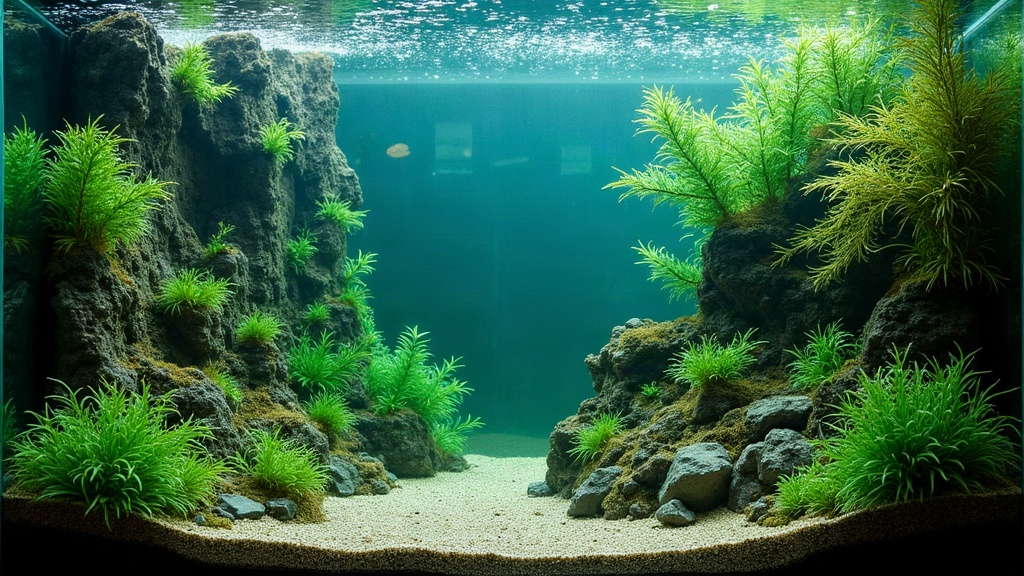
If your freshly flooded tank has turned into a brown, dusty mess that reappears a day after you wipe it off, you’re not imagining things. That’s a diatom bloom, and winter makes it stick around far longer than it should. Here’s why cold weather drags out the problem, plus a real plan to beat it.
Why Diatoms Love Newly Flooded Tanks in Winter
Diatoms (Bacillariophyta) are single-celled algae wrapped in silica shells. They’re almost always the first colonizers in a new aquascape, simply because fresh substrate, new hardscape, and tap water hand them exactly what they want: dissolved silicates, plus ammonia and nitrite from a nitrogen cycle that hasn’t finished establishing itself yet.
Winter doesn’t just make things uncomfortable for you, it actively feeds the problem, in three ways:
- Shorter days mean less ambient light, which knocks out the competition from green algae and thriving plants, so diatoms get the run of the tank.
- Cooler water (often the result of a heater that’s undersized for how cold the room gets) slows down bacterial colonization. That stretches out the “new tank syndrome” phase, giving diatoms more time to feast on leftover nutrients.
- Slower plant metabolism under low light means plants pull in silicates and nitrogen at a crawl, leaving plenty on the table for diatoms.
The practical effect? A tank flooded in October or November can stay coated for 6 to 8 weeks. Flood that same tank in spring, run the same maintenance, and you’re looking at 2 to 3 weeks, tops.
Signs You’re Dealing With Diatoms (Not Another Algae)
- A brown or golden-brown dusty film on glass, substrate, and leaves
- Wipes away with a finger, no problem, but it’s back within a day or two
- Spreads as a flat sheet rather than hairy strands or little green dots
- Shows up mostly on the substrate and lower glass, rarely bothering plant tips
If what you’re scraping off is slimy or stringy, or if it’s parking itself on the brightest spots in the tank first, you’re probably not fighting diatoms at all. That sounds more like cyanobacteria, and it calls for a different fix entirely (think blackout period and better flow, not more light).
Step-by-Step Plan to Clear Persistent Winter Diatoms
1. Stabilize Temperature First
Check whether your heater can actually handle your room’s winter lows, not just the tank’s volume on paper. A 25-gallon tank sitting in a room that dips to 60°F (15°C) overnight will need more than the textbook “3-5 watts per gallon.” Get the water steady at 75-78°F (24-26°C) and you’ll speed up the nitrogen cycle, which shrinks the diatom window considerably.
2. Increase, Don’t Decrease, Light Duration Carefully
Here’s the part that trips people up: dim winter lighting often makes diatoms worse, not better, because it starves out the plants that would otherwise compete with them. Once your test kit shows zero ammonia and zero nitrite, bump lighting up to 7-8 hours a day, matching intensity to whatever plants you’re growing. Don’t jump straight to high light, though. Ease into it over a week or two.
3. Manual Removal on a Schedule
- Siphon the substrate surface every 2-3 days during water changes
- Wipe the glass with a clean algae pad before each water change
- Rinse plant leaves gently rather than scrubbing them, so you don’t tear the tissue
4. Introduce a Cleanup Crew
Nerite snails and Otocinclus catfish are genuinely good at this job, and they handle cooler water better than a lot of other cleanup options. Wait until ammonia and nitrite both hit zero before adding them, usually around 3-4 weeks after flooding.
5. Control Silicate Input
- Test your tap water for silicates. If the numbers are high, run it through a reverse osmosis unit or add a silicate-removing resin to your filter
- Steer clear of silica-heavy substrates if you’re setting up a second tank mid-winter
6. Increase Water Change Frequency Temporarily
While the bloom is active, switch from weekly to twice-a-week 30% water changes. That extra frequency pulls dissolved silicates and excess nutrients straight out of the system, cutting off the bloom’s food supply.
How Long Should This Take?
Stay consistent and you should see real improvement within 10-14 days, with a fully clear tank by week 4 to 6, winter conditions and all. Still battling diatoms past the 8-week mark? Go back and retest your source water for silicates, and double-check that your nitrogen cycle has actually finished. A stalled cycle is, by far, the most common culprit hiding behind a bloom that won’t quit.
Conclusion
A stubborn diatom bloom in a freshly flooded winter tank isn’t a sign you’ve done something wrong. It’s just cold water, low light, and an unfinished nitrogen cycle doing exactly what they do. Get the temperature stable, bring light up gradually, keep wiping and siphoning on schedule, bring in some diatom-eating livestock, and manage silicates with more frequent water changes. Stick with it, and your tank will be past this phase and growing in nicely well before spring shows up.