Managing Acid Buffer Depletion in Iwagumi Aquascapes with Seiryu Stone
Managing Acid Buffer Depletion in Iwagumi Aquascapes with Seiryu Stone
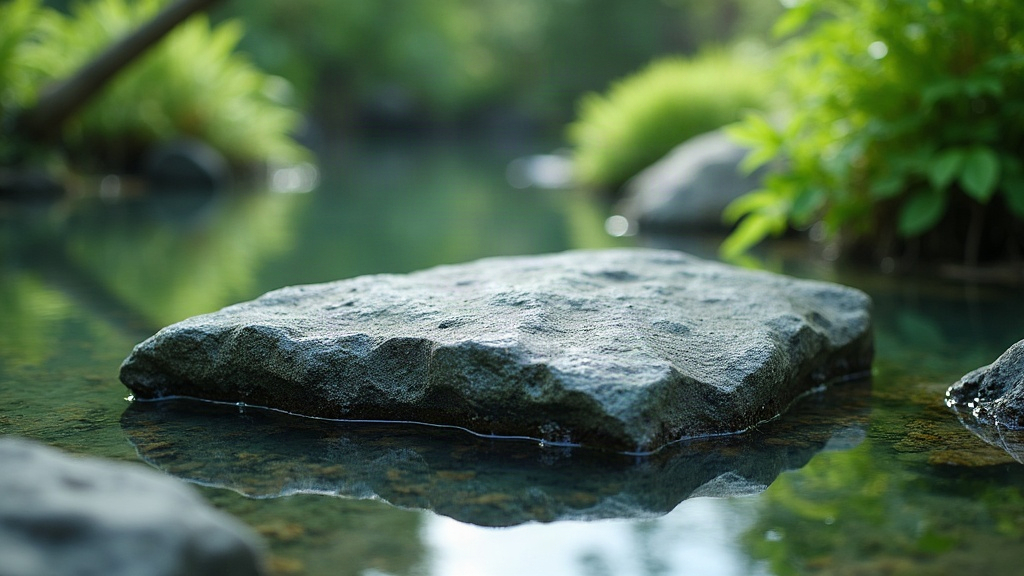
The minimalist beauty of an Iwagumi aquascape comes down to one thing: contrast. Lush green carpeting against jagged, weathered stone. For most aquascapers chasing that look, Seiryu stone is the go-to choice, and for good reason, it’s stunning. But under that calm-looking water surface, there’s a quiet chemical fight going on. If you’re pairing active aquasoil with these gray rocks, managing acid buffer depletion in Iwagumi aquascapes with Seiryu stone quickly becomes one of the biggest threats to your tank’s long-term stability.
This guide walks through why this conflict happens in the first place, how to spot it before it wrecks your carpet, and what actually works to keep your water chemistry in check.
The Chemistry Behind the Conflict
Start with the materials themselves. Most planted tanks today run on “active” aquasoil, substrates loaded with peat, organic matter, and humic acids. Their whole job is to act as an acid buffer: pulling Carbonate Hardness (KH) out of the water to keep things soft and acidic, typically somewhere around pH 6.0 to 6.8.
Seiryu stone works against that. It’s a limestone-based rock, heavy with calcium carbonate (CaCO3), and once it’s underwater it starts leaching carbonates. Slowly, but constantly. That pushes General Hardness (GH) and KH upward, and pH follows right along with them.
So you end up with a tug-of-war that never really stops. The stone keeps dumping carbonates in, the soil keeps trying to pull them back out. Given enough time, the soil simply runs out of gas, months or even years sooner than it would if you’d used inert rock instead. That premature exhaustion is what people mean by acid buffer depletion.
Signs Your Aquasoil Is Depleted
How do you know your soil has lost this fight? A few red flags to watch for:
- Creeping pH levels: CO2 is running, your drop checker looks fine, and yet your pH still tests at 7.2 or higher.
- Persistent high KH: Your tap water or RO water measures 0-1 KH, but a few days after a water change your tank is sitting at 4+ KH. That’s your soil telling you it’s tapped out.
- Stunted plant growth: Hemianthus callitrichoides (Cuba) and Glossostigma elatinoides, the classic Iwagumi carpet plants, need soft, acidic water to thrive. If they start yellowing, stalling out, or melting, rising pH and KH are probably locking away iron and other micronutrients they need.
- Algae outbreaks: Stressed plants in alkaline water practically send out invitations to algae. Black Beard Algae (BBA) and Green Spot Algae (GSA) are the usual suspects that show up first.
Strategies for Managing Acid Buffer Depletion
The good news? You don’t have to give up on Seiryu stone to run a healthy Iwagumi. A handful of proactive steps can slow the depletion rate way down and keep the tank balanced for much longer.
1. Acid-Washing Stones Before Hardscaping
This is your best move, and it happens before the tank ever gets filled. Soaking Seiryu stones in a muriatic acid bath (hydrochloric acid) strips away the outer layer of calcium carbonate.
Two things happen as a result: the stone reveals a deeper, richer charcoal-gray color underneath (honestly, it looks better too), and you get rid of the most reactive, easily-dissolved carbonates before they ever touch your tank water. That cuts down leaching significantly once the rock goes in. (Note: wear thick gloves, goggles, and a respirator when handling strong acids, and do this outdoors, not in your garage with the door closed).
2. Utilize RO (Reverse Osmosis) Water
If your tap water already runs moderate to high KH, tossing Seiryu stone into that mix is basically a death sentence for your aquasoil’s buffering capacity, it won’t stand a chance. RO water solves this by stripping out all minerals (0 KH, 0 GH), so you’re not adding any extra buffer on top of what the stone is already leaching. From there, remineralize the RO water with GH additives (calcium and magnesium) for plant nutrition, but leave KH at zero. That gives your soil some breathing room.
3. Aggressive Water Change Schedules
The first three to six months are when Seiryu stone leaches carbonates fastest. This is the window where you need to be disciplined. Doing 50% water changes once, or even twice, a week physically hauls the accumulated carbonates out of the tank before your soil has to absorb them all itself.
4. Strategic CO2 Injection
Pressurized CO2 isn’t just plant food, it forms weak carbonic acid in the water and pulls pH down during the photoperiod. It won’t stop the actual mineral depletion happening in your soil (that’s a losing battle regardless), but it does buy you a daily window of good, acidic pH where plants can actually take up nutrients efficiently, even with Seiryu stone sitting right next to them.
The Long-Term Reality
Here’s the thing nobody wants to hear: no active soil lasts forever. In a heavily hardscaped Seiryu stone Iwagumi, soil that might normally buffer for three years could tap out in as little as 12 to 18 months. That’s just the tradeoff you’re making for the aesthetic.
Once the buffer’s gone, you’ve got a few paths forward: liquid acid buffers (use these carefully, a pH crash can wipe out your livestock overnight), switching to plant species that tolerate harder water, or planning ahead for a full substrate swap down the line.
At the end of the day, managing acid buffer depletion in Iwagumi aquascapes with Seiryu stone comes down to staying ahead of the chemistry instead of reacting to it. Acid-wash your stones, run RO water, stay on top of your water change schedule, and you can keep that classic Iwagumi look thriving without losing your carpet to a slow, creeping pH climb.