Crushed Lava Rock vs Ceramic Bio-Rings as a False Bottom
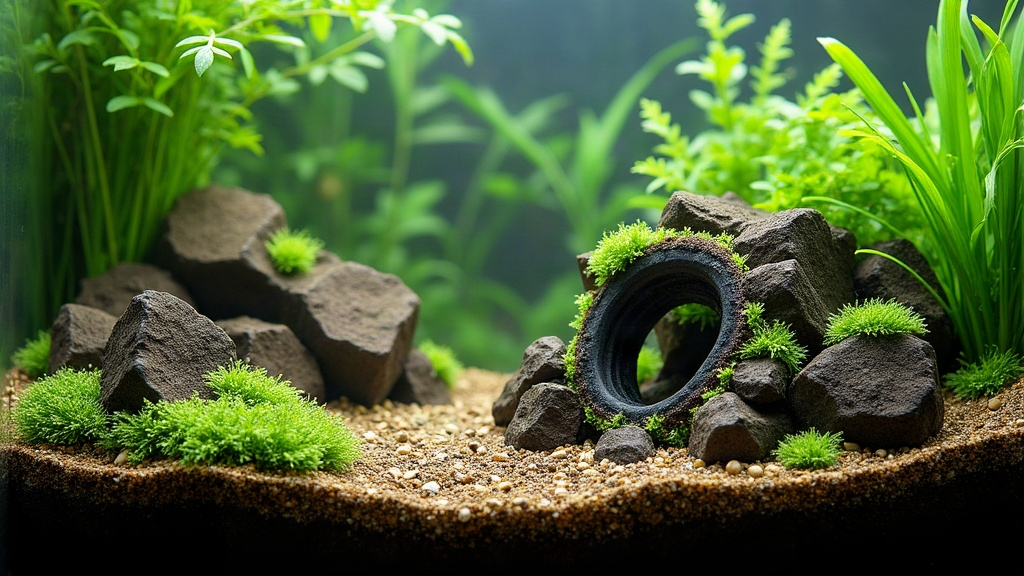
Choosing between crushed lava rock and ceramic bio-rings as a false bottom under aquasoil really comes down to one trade-off. Lava rock is cheaper by the bag and gives roots something rough to grab onto. Ceramic bio-rings cost more but drain more evenly and hold up better over the years, which matters a lot if you’re growing deep-rooted plants like Amazon swords, crypts, or stem plants with big, tangled root mats. Both materials work fine on their own. The real differences only show up after you’ve buried them under 2-4 inches of nutrient-rich soil and left them there for a few years.
Why Use a False Bottom at All?
A false bottom is just a porous layer you tuck under the aquasoil, and it earns its keep in a few ways:
- It stretches out the substrate’s useful life by keeping compaction and anaerobic dead zones away from the root area
- It gives beneficial bacteria (both nitrifying and denitrifying types) a reservoir to colonize, which keeps the nitrogen cycle humming
- It cuts down how much pricey aquasoil you actually need, since you can build up height cheaply underneath instead
- It keeps drainage working over the long haul, so the soil doesn’t turn into compacted mud after a year or two
Skip the false bottom and aquasoil alone will eventually compress on you, squeezing the root zone and inviting hydrogen sulfide to build up. Anyone who’s kept a tank running for three-plus years knows that smell. It’s not subtle.
Crushed Lava Rock: The Case For
Lava rock, usually sold crushed into 1/4”-1/2” chunks for aquascaping, has a loyal following for good reason:
- Cost: You’re looking at roughly $8-15 to cover a 20-gallon footprint at an inch deep. That’s a fraction of what bagged bio-media runs.
- Irregular surface: The jagged, pitted texture gives roots physical grip points. A lot of growers swear it helps anchor heavy feeders like Echinodorus species that otherwise want to float free during the first few weeks.
- High surface area: The natural vesicular structure hosts bacteria colonies well, the same reason it gets used in terrestrial hydroponics setups.
- Widely available: You don’t need an aquarium shop. Garden centers and landscaping suppliers carry it too.
Downsides: unless you sieve it yourself, particle size is all over the place, and that inconsistency creates uneven compaction pockets over time. The sharp edges aren’t kind to fine root hairs either, especially when you’re uprooting plants for a rescape. And some batches leach trace minerals early on, so a good rinse before use isn’t optional.
Ceramic Bio-Rings: The Case For
Ceramic bio-rings (yes, the same stuff sitting in your canister filter trays) have caught on as a substrate base for a few solid reasons:
- Uniform porosity: manufactured to a consistent pore size, so drainage across the tank floor stays predictable from corner to corner.
- Rounded shape: cylindrical rings don’t chew up fine roots the way jagged lava rock can when you’re replanting.
- Chemically inert: no mineral leaching, no pH swings. That matters if you want the aquasoil doing all the buffering work, undisturbed.
- Long-term stability: ceramic doesn’t crumble under years of substrate weight. Cheaper lava rock, by contrast, can fracture into fine silt over time.
Downsides: the price jump is real, often $20-30 for the same volume you’d get lava rock for. And the smooth, rounded surface just doesn’t grip like lava rock’s rough edges do, which matters if you’re anchoring something with a serious root system.
Head-to-Head for Deep-Rooted Plants
| Factor | Crushed Lava Rock | Ceramic Bio-Rings |
|---|---|---|
| Cost per gallon | Low | Moderate-High |
| Drainage consistency | Variable (size-dependent) | Very consistent |
| Root anchoring | Strong (rough texture) | Moderate (smooth) |
| Longevity | 3-5 years before crumbling | 5-10+ years |
| Bacteria colonization | Excellent | Excellent |
| Root damage risk on uproot | Higher | Lower |
For plants like Echinodorus bleheri, Cryptocoryne wendtii, or Vallisneria, the ones that send roots down 3 inches or more and plan on staying put for years, ceramic bio-rings’ gentler texture and longer lifespan mean less disturbance down the road. But if you’re the type who rescapes every six months, or you’re working on a budget, lava rock’s grip and low price tag make a lot more sense.
Practical Setup Tips
- Keep the layer thin: 0.5-1 inch of false bottom is plenty. Going deeper doesn’t improve drainage, it just eats into your usable tank height.
- Rinse it well no matter which material you pick. Skip this step with lava rock especially and you’ll be staring at cloudy water for days.
- Slip a fine mesh or pond underlayment fabric between the false bottom and the aquasoil. Otherwise fine soil particles sift down over time and clog up the pore spaces, defeating the whole point.
- Don’t mix the two materials on a whim. Pick one and stick with it, so your drainage behavior stays predictable instead of turning into a guessing game.
Conclusion
Neither one is flat-out better. It’s a budget-versus-longevity call. Crushed lava rock wins on price and root grip if you’re rescaping often. Ceramic bio-rings win on consistency, gentleness on roots, and multi-year durability if you’re planting for the long haul. Setting up a permanent display with heavy root feeders you don’t intend to disturb? Spend the extra money on ceramic bio-rings. Still experimenting, still rearranging things every few months? Lava rock will do the job just fine, and your wallet will thank you.