Keeping Asian Stone Catfish Visible in a Leaf-Littered Nano Tank
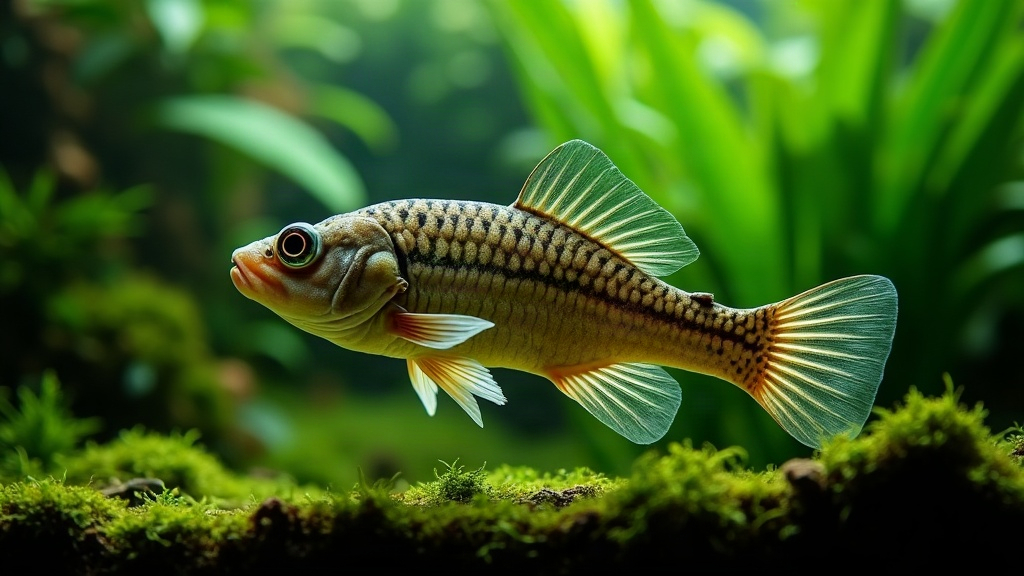
Asian Stone Catfish (Hara jerdoni and related Hara species) rank among the most charming miniature bottom-dwellers you can put in a nano tank. Trouble is, their natural camouflage and obsession with cover make them a nightmare to actually spot once you’ve buried the tank in leaf litter. The good news? Get the layout, lighting, and feeding right, and you can keep their shy instincts intact while still catching these tiny “hoverfish” gliding across the substrate on a regular basis.
Why Stone Catfish Disappear in Leaf Litter
Stone Catfish evolved in slow, leaf-choked streams scattered across South and Southeast Asia. Their mottled brown-and-black bodies mimic dead leaves almost perfectly, and those flattened, winged pectoral fins let them “hover” motionlessly right over the debris. Drop them into a tank overloaded with botanicals and this camouflage works a little too well. Plenty of owners assume their fish died or somehow escaped, when really the catfish is just sitting three centimeters below the leaf canopy, invisible.
The fix starts with a mindset shift: you’re not trying to strip away their hiding instinct. You’re trying to build sightlines that let you watch it happen.
Rethinking Your Leaf Litter Layout
The classic mistake is blanketing the whole substrate in a thick, even carpet of leaves. Try a zoned litter approach instead:
- Dense zones (roughly 40% of the footprint): Piles of Catappa, oak, or beech leaves stacked 2-3 layers deep near the back and in the corners. This gives fish a genuine retreat.
- Open zones (roughly 60% of the footprint): Bare sand or fine gravel along the front glass and through the center, with just a light dusting of leaf fragments rather than whole leaves.
Stone Catfish naturally patrol the border between cover and open ground, especially while foraging at night or during feeding time. Keep an open corridor along the viewing pane and your odds of catching one mid-hover go way up.
Use Structure, Not Just Substrate
Prop small driftwood branches, almond leaf stems, or bits of catappa bark at slight angles above the litter bed. Stone Catfish often rest on these elevated surfaces instead of burying themselves in the leaves, a habit you can actually encourage by placing 2-3 flat wood perches at different heights in the tank.
Lighting Adjustments That Encourage Activity
These fish are crepuscular: most active at dawn, dusk, and after dark. Run strong daytime lighting all day and they’ll simply hide until the lights go down. A better schedule looks like this:
- Bright period (4-5 hours): Standard planted-tank intensity, enough for photosynthesis.
- Dim transition (1-2 hours): Dial a dimmable LED down to 20-30% brightness to simulate dusk.
- Low amber/moonlight glow (rest of the evening): A dim blue or amber moonlight LED lets you watch natural nighttime foraging without spooking anyone.
This graduated schedule reliably produces more visible activity than a hard on/off switch. An abrupt jump from bright to pitch dark startles fish into hiding rather than coaxing them out to explore.
Feeding Strategy to Draw Them Out
Stone Catfish are ambush feeders, and they respond strongly to scent and movement:
- Target-feed with frozen bloodworms or baby brine shrimp, dropped into the open zones rather than the leaf piles.
- Feed at roughly the same time each evening. Within 1-2 weeks they’ll start learning the schedule and emerging in anticipation.
- Use a turkey baster or feeding tube to place food precisely near known perch spots instead of scattering it across the whole tank.
Don’t dump food directly into the leaf litter. Uneaten scraps rot unnoticed in there and quietly wreck your water quality.
Tankmates and Stocking Density
Because Stone Catfish are slow and non-aggressive, skip fast, food-competing tankmates like danios or the more boisterous tetras. Better company includes:
- Chili rasboras (Boraras brigittae)
- Pygmy corydoras
- Dwarf shrimp (as tankmates, not snacks. Adult Stone Catfish rarely bother them)
Keep them in groups of 6 or more. In numbers, they show noticeably more daytime activity and confidence, often clustering near the same perch instead of each one sulking alone in its own leaf pile.
Water Parameters Worth Confirming
- Temperature: 68-77°F (20-25°C)
- pH: 6.0-7.5, soft to moderately hard water
- Gentle flow. They hate strong current and will hide constantly if the flow is too aggressive.
Conclusion
Keeping Asian Stone Catfish visible in a leaf-littered nano tank isn’t about erasing their hiding instincts. It’s about building zones, lighting, and feeding routines that work with their crepuscular, ambush-predator nature instead of against it. Combine dense retreat piles with genuine open sightlines, a dusk-style graduated lighting schedule, and consistent, targeted feeding, and these secretive little “hoverfish” stop being occasional ghosts and become one of the most rewarding fish to watch in the whole tank.