Step-by-Step Amazon Blackwater Biotope Setup for Apistogramma Cichlids
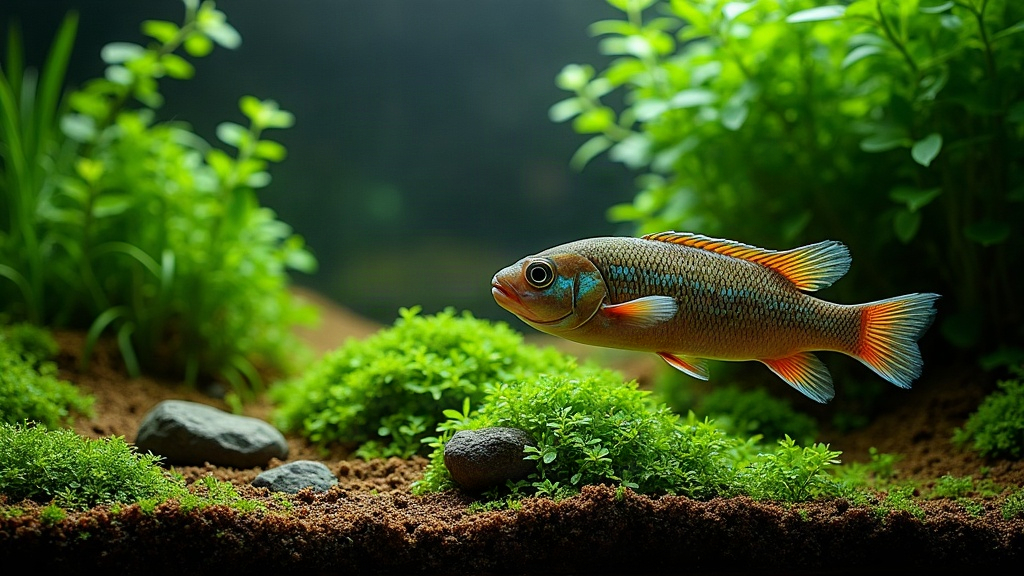
Building an Amazon Blackwater Biotope for Apistogramma Cichlids
If you really want to see an Apistogramma at its best, colors flaring, fins flicking, courting a female in a shadowy corner, nothing beats recreating the real thing: a proper Amazon blackwater setup. In the wild, these little cichlids live in slow, tea-colored tributaries choked with sunken leaves, tangled roots, and half-buried branches. It’s a dim, cluttered, almost claustrophobic world, and that’s exactly the point. This guide walks you through the substrate, the hardscape, and the water chemistry needed to build something close enough to the real thing that your fish will actually behave like they do back home—low-tech planted tanks with species like Bucephalandra work beautifully in these conditions.
Understanding the Blackwater Environment
Before you buy anything, it helps to know what you’re actually trying to copy. Blackwater streams get their signature dark-tea color from tannins and humic acids, released as fallen leaves, seed pods, and driftwood slowly break down in the water. The result is soft, acidic water with almost no mineral hardness to speak of.
For species like Apistogramma cacatuoides or Apistogramma agassizii, this isn’t just aesthetic. It’s chemistry that lowers stress, triggers spawning, and keeps disease at bay, since tannins have mild antibacterial and antifungal properties. Put a wild-caught Apistogramma into crystal-clear, hard tap water and it’ll often sulk in a corner. Give it tannin-stained water and cover, and you’ll see it come alive within days.
Essential Equipment and Materials
Here’s what you’ll actually need before you start:
- Aquarium: A 20-gallon “long” tank at minimum. Footprint matters far more than height here since Apistogrammas patrol the bottom, not the water column.
- Filtration: A sponge filter or a canister running on low flow. These fish evolved in sluggish water, so strong currents just stress them out and blow leaf litter everywhere.
- Substrate: Fine, inert pool filter sand or aquarium-grade play sand, nothing sharp or rough.
- Hardscape: Branchy driftwood, Manzanita or Spider wood work great, to mimic submerged roots.
- Botanicals: Catappa (Indian Almond) leaves, oak leaves, alder cones, assorted tropical seed pods.
- Lighting: A dimmable LED, because you’re aiming for filtered jungle-canopy light, not a sunny reef tank.
Step-by-Step Setup Guide
Step 1: Preparing the Substrate
Apistogrammas sift sand constantly, hunting for tiny invertebrates and microfauna. Sharp gravel or coarse planted-tank soil will irritate their gills and mouths, so skip those entirely. Rinse fine sand until the water runs clear, then spread a shallow layer, roughly 1 to 1.5 inches, across the tank floor. You don’t need depth here; there’s no heavy root system to support since you’re not growing substrate-rooted plants.
Step 2: Designing the Hardscape and Caves
This step decides whether your tank works or turns into a bloodbath. Apistogrammas are territorial, sometimes viciously so, especially once breeding starts, and breaking sightlines is your main defense against that.
- Stack driftwood into overlapping tangles with overhangs, not a single neat branch standing alone.
- Tuck half coconut shells or small terracotta pots under the wood as spawning caves.
- Give each cave a narrow entrance and make sure it’s hidden from the others. If you’re running a harem (one male, several females), visual isolation between caves is what keeps the peace.
Step 3: Layering the Botanicals
This is the fun part. Boil your leaves and seed pods for 15 to 20 minutes, both to waterlog them so they sink right away and to sterilize them. Scatter them thickly across the sand, especially near roots and cave mouths. As they decompose over the following weeks, they’ll leach tannins, gently drop the pH, and grow a layer of biofilm, which happens to be one of the best natural foods for Apistogramma fry. Don’t be tidy about it; a messy, leaf-littered floor is exactly what you want.
Step 4: Mastering Water Chemistry
Real blackwater is soft, properly soft, not “slightly less hard” tap water.
- Start with Reverse Osmosis (RO) water, remineralized just enough to hit a GH of 1 to 3.
- Target a pH of 5.5 to 6.5.
- If the botanicals alone aren’t pulling the pH down far enough, run the water through some aquarium-safe peat moss.
- Keep temperature steady between 78°F and 82°F (25°C to 28°C).
Test regularly for the first month. Soft water swings faster than hard water, and a sudden pH crash can hit fish harder than a slow, natural drift.
Step 5: Lighting and Flora
In the actual Amazon, blackwater creeks rarely support submerged plants; too little light gets through the canopy and the tannin-stained water. Floating plants, though, are both authentic and genuinely useful. Amazon Frogbit (Limnobium laevigatum) or Salvinia work well: their trailing roots look great and give fry somewhere to hide, while the leaf cover cuts down excess light and soaks up nitrates, keeping the water cleaner between changes.
Maturing the Tank and Adding Livestock
Resist the urge to rush this. Let the tank cycle and “season” for a solid 4 to 6 weeks before adding anything sensitive. You’ll likely see a white, slimy film form on the wood and leaves at some point. That’s biofilm, not a problem, and it’s actually food for your future fry, so leave it alone.
When you’re ready to stock, add a school of dither fish first, Cardinal Tetras or Ember Tetras are good choices. Watching confident tetras cruise the mid-water tells the Apistogrammas the coast is clear, which usually coaxes them out of the leaf litter faster than if they went in alone.
Conclusion
A well-built Amazon blackwater biotope isn’t just a decorated tank, it’s a working reconstruction of a habitat these fish have adapted to over millions of years. Fine sand, tangled driftwood, a generous scatter of leaf litter, and genuinely soft, acidic water: get those four things right and you’ll see the payoff in behavior you rarely get from a “generic” setup. Brighter colors, real spawning activity, fish that actually come out and explore instead of hiding all day. That’s the difference between keeping Apistogrammas and actually watching them live.